Surgical staplers and tools are medical devices used to join, divide, close, or reinforce biological tissue during surgical procedures. They can provide controlled rows of staples and are used across general surgery, gastrointestinal procedures, thoracic surgery, bariatric surgery, gynecology, and other specialties.
Modern surgical stapling systems range from manually operated instruments to powered devices with integrated tissue compression and firing mechanisms. Their design combines precision mechanical engineering, medical-grade materials, ergonomic handles, specialized staple configurations, and manufacturing processes designed for controlled clinical use.
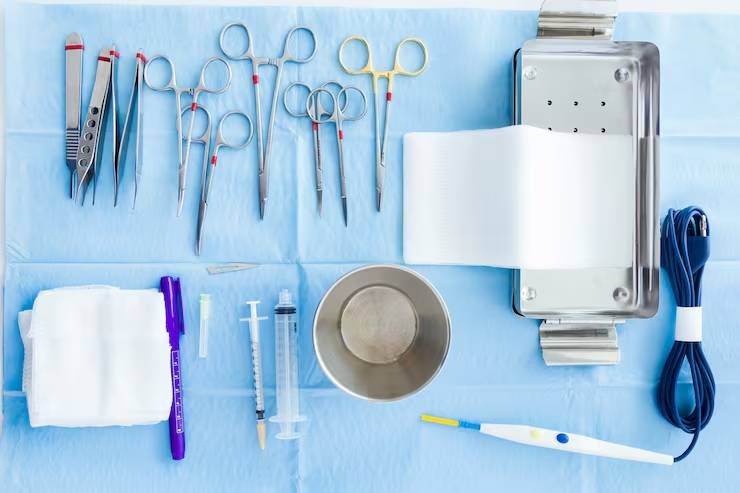
What Are Surgical Staplers & Tools?
Surgical staplers are specialized instruments that place surgical staples into tissue to create a controlled closure or tissue connection.
Depending on their configuration, stapling devices can be designed for:
Tissue closure
Tissue division
Anastomosis
Resection
Skin closure
Vessel or tissue management
Wound closure
Surgical stapling tools can be reusable or single-use depending on the instrument design and clinical application.
A typical stapling system may include a handle, firing mechanism, staple cartridge, anvil, shaft, articulation mechanism, and tissue-compression components.
How Surgical Staplers Work
The basic operating sequence varies according to the device, but many systems follow a similar mechanical process.
1. Tissue Positioning
The surgeon positions the tissue between the device's relevant components, such as the cartridge and anvil.
2. Tissue Compression
The instrument brings the tissue into a controlled configuration before staple deployment.
Compression can help establish the intended staple formation and tissue approximation.
3. Staple Deployment
When the firing mechanism is activated, staples are pushed from the cartridge toward the anvil.
The anvil shapes the staples into their designed configuration.
4. Tissue Joining or Division
Depending on the instrument, staple deployment can close tissue, create an anastomosis, or occur simultaneously with tissue division using an integrated cutting mechanism.
Major Types of Surgical Staplers
Surgical staplers can be categorized according to their clinical application and mechanical configuration.
Linear Staplers
Linear staplers place one or more straight rows of staples.
They may be used for tissue closure, resection, or other procedures requiring a linear staple line.
Linear Cutting Staplers
Linear cutting staplers combine stapling and tissue division.
They can place parallel staple rows on either side of a cutting line.
These devices are widely associated with gastrointestinal, bariatric, thoracic, and other tissue-resection procedures.
Circular Staplers
Circular staplers are designed to create circular anastomoses between tubular or hollow anatomical structures.
They are used in selected gastrointestinal and colorectal procedures.
Skin Staplers
Skin staplers are designed for external wound closure.
They typically use individual metal staples and are operated manually.
Endoscopic Staplers
Endoscopic staplers are designed for minimally invasive procedures.
Their shafts can pass through laparoscopic access ports, while articulation mechanisms can help position the stapling head within the surgical field.
Powered Staplers
Powered surgical staplers use an electrically or electronically assisted firing mechanism.
They can incorporate controlled firing systems, tissue sensing, articulation controls, or other technologies depending on the device.
Surgical Stapler Types Comparison
| Stapler Type | Main Function | Common Application Areas |
|---|---|---|
| Linear Stapler | Linear tissue closure | General and gastrointestinal surgery |
| Linear Cutting Stapler | Stapling and tissue division | Resection procedures |
| Circular Stapler | Circular anastomosis | Colorectal and gastrointestinal surgery |
| Skin Stapler | External wound closure | Surgical and emergency wound closure |
| Endoscopic Stapler | Minimally invasive stapling | Laparoscopic and thoracic procedures |
| Powered Stapler | Assisted stapling | Selected minimally invasive procedures |
Key Components of Surgical Staplers
Staple Cartridge
The cartridge contains the surgical staples and associated deployment components.
Cartridge design varies according to staple size, configuration, tissue application, and instrument type.
Anvil
The anvil provides the surface against which staples are formed.
Its geometry is engineered to create the intended staple configuration when the device is fired.
Firing Mechanism
The firing mechanism transfers mechanical or powered force to the staple-driving components.
Shaft
Endoscopic staplers use elongated shafts that allow the device to reach the surgical site through minimally invasive access points.
Articulation Mechanism
Some staplers include articulation systems that allow the distal portion of the instrument to be positioned at different angles.
Tissue Compression Components
Compression mechanisms help bring tissue into the intended configuration before staple deployment.
Cutting Blade
Certain staplers incorporate a blade that divides tissue between or adjacent to staple rows.
Surgical Stapling Technologies
Mechanical Stapling
Mechanical staplers use manually generated force to activate the firing mechanism.
They are commonly designed around handles, levers, springs, linkages, and precision-machined components.
Powered Stapling
Powered systems use an electrically driven mechanism to assist staple deployment.
Depending on the device, powered systems can provide controlled firing movement and may incorporate electronic feedback.
Articulating Stapling
Articulating devices allow the stapling head to change orientation relative to the shaft.
This can help position the instrument during minimally invasive procedures.
Tissue Sensing
Some advanced stapling systems incorporate sensing technologies designed to assess characteristics associated with tissue interaction.
These systems can use electronic feedback to influence device operation, depending on the specific product design.
Materials Used in Surgical Staplers
Surgical staplers require materials with appropriate mechanical, biocompatibility, corrosion-resistance, and manufacturing characteristics.
Common materials can include:
Stainless steel
Titanium
Medical-grade polymers
Engineering plastics
Aluminum alloys in selected components
Specialty medical materials
Staple materials are selected according to the intended clinical application and device design.
Titanium has historically been used in various surgical staple designs because of its combination of mechanical and biological characteristics.
Manufacturing Processes for Surgical Staplers
Manufacturing surgical staplers requires highly controlled production processes because dimensional accuracy and component consistency are important.
Product Engineering
Engineers define the mechanical architecture, staple geometry, firing characteristics, tissue interface, materials, and ergonomic requirements.
Precision Machining
Metal components can be produced through precision machining, grinding, drilling, forming, and other manufacturing processes.
Injection Molding
Polymer components such as handles, housings, cartridge bodies, and other parts can be manufactured using medical-grade injection-molding processes.
Metal Forming
Staples and selected structural components may undergo forming processes to achieve their required geometry.
Surface Treatment
Some components may receive controlled surface treatments or finishing processes according to material and device requirements.
Assembly
Components are assembled in controlled manufacturing environments.
Assembly can involve:
Staple loading
Cartridge assembly
Handle installation
Firing-mechanism integration
Shaft assembly
Articulation assembly
Blade installation
Functional testing
Sterilization and Packaging
Single-use surgical devices are packaged using controlled medical-device packaging processes.
Depending on the product, sterilization may use methods such as ethylene oxide or radiation-based processes.
Quality Control in Surgical Stapler Manufacturing
Medical-device manufacturers use controlled quality systems to evaluate components and finished devices.
Testing can include:
Dimensional inspection
Staple-forming verification
Firing-force testing
Mechanical durability testing
Material verification
Packaging integrity testing
Sterilization validation
Functional testing
Manufacturing requirements vary according to the device, intended use, regulatory jurisdiction, and applicable medical-device standards.
Applications of Surgical Staplers
Gastrointestinal Surgery
Staplers are used in selected procedures involving intestinal resection, tissue division, and anastomosis.
Colorectal Surgery
Circular and linear stapling technologies can be used for selected colorectal procedures.
Bariatric Surgery
Linear cutting staplers are widely associated with procedures where controlled tissue division and staple-line formation are required.
Thoracic Surgery
Endoscopic staplers can be used in selected thoracic procedures involving lung or other tissue structures.
General Surgery
Stapling devices can support selected tissue closure, resection, and reconstruction procedures.
Gynecological Surgery
Certain stapling technologies may be used in selected minimally invasive procedures depending on surgical technique.
Skin Closure
Skin staplers can provide external wound closure in appropriate clinical situations.
Surgical Staplers in Minimally Invasive Surgery
Minimally invasive procedures have influenced the development of longer shafts, articulating heads, compact mechanisms, and improved visualization compatibility.
Endoscopic staplers can be designed to pass through trocar systems and operate within confined anatomical spaces.
Important design characteristics include:
Shaft diameter
Shaft length
Articulation range
Jaw opening
Staple configuration
Firing mechanism
Handle ergonomics
Visibility and positioning
Manual vs Powered Surgical Staplers
| Feature | Manual Stapler | Powered Stapler |
|---|---|---|
| Firing Mechanism | Manual force | Powered mechanism |
| Control | Handle-driven | Motor/electronic assistance |
| Energy Source | Mechanical | Battery or electrical system |
| Feedback | Primarily tactile/mechanical | May include electronic feedback |
| Complexity | Generally simpler | More integrated electronics |
| Applications | Broad range | Selected advanced procedures |
The appropriate device depends on the surgical procedure, instrument configuration, clinical protocol, and surgeon preference.
Global Surgical Stapler Manufacturers and Suppliers
The global surgical stapling market includes medical-device manufacturers that develop staplers, cartridges, surgical instruments, minimally invasive devices, and related technologies.
Examples include:
Medtronic
Ethicon
Intuitive Surgical
CONMED
Meril Life Sciences
The broader supplier ecosystem also includes contract manufacturers, precision-machining companies, medical-grade polymer manufacturers, sterilization providers, packaging manufacturers, and surgical-instrument component suppliers.
When evaluating suppliers, organizations typically consider regulatory compliance, device specifications, manufacturing quality systems, material traceability, sterilization processes, packaging, technical documentation, and supply continuity.
How to Select Surgical Stapling Tools
Selection depends heavily on the intended surgical application.
Important considerations include:
Procedure type
Tissue characteristics
Staple configuration
Instrument size
Shaft length
Articulation requirements
Manual or powered operation
Cartridge configuration
Sterilization format
Device compatibility
Regulatory requirements
Clinical protocols
Surgical staplers should be selected and used according to their approved indications, manufacturer instructions, and applicable clinical protocols.
Maintenance and Handling
Reusable surgical instruments require appropriate cleaning, inspection, sterilization, and maintenance procedures according to their instructions for use.
Single-use staplers are generally supplied sterile and intended for the specific use conditions stated by the manufacturer.
Before clinical use, medical personnel follow applicable procedures for:
Packaging inspection
Device integrity
Sterility verification
Instrument preparation
Cartridge compatibility
Mechanical function
Post-procedure disposal or reprocessing where applicable
Frequently Asked Questions
1. What are surgical staplers used for?
Surgical staplers are medical devices used for tissue closure, tissue division, resection, anastomosis, and selected wound-closure procedures.
2. What are the main types of surgical staplers?
Common categories include linear staplers, linear cutting staplers, circular staplers, skin staplers, endoscopic staplers, and powered staplers.
3. What materials are used to manufacture surgical staples?
Surgical staples can be manufactured from medical-grade metals such as stainless steel or titanium, depending on the device design and intended clinical application.
4. What is the difference between a linear and circular stapler?
A linear stapler creates a straight staple line, while a circular stapler is designed to create a circular anastomosis between suitable anatomical structures.
5. Are surgical staplers reusable?
Some surgical instruments are designed for reuse and reprocessing, while many modern stapling devices and cartridges are single-use. The specific device labeling determines whether reuse or reprocessing is permitted.
Conclusion
Surgical staplers and tools are precision medical devices that support tissue closure, division, resection, anastomosis, and wound management across numerous surgical specialties. Their designs range from straightforward mechanical skin staplers to sophisticated endoscopic and powered systems.
Manufacturing requires controlled processes including precision machining, injection molding, metal forming, assembly, sterilization, packaging, and functional testing. Material selection and dimensional accuracy are particularly important for components such as staples, anvils, cartridges, shafts, and firing mechanisms.
Modern surgical stapling technologies continue to incorporate articulation, powered operation, ergonomic improvements, and electronic or sensing technologies. Their use remains closely tied to specific clinical indications, device labeling, surgical techniques, and applicable medical-device requirements.