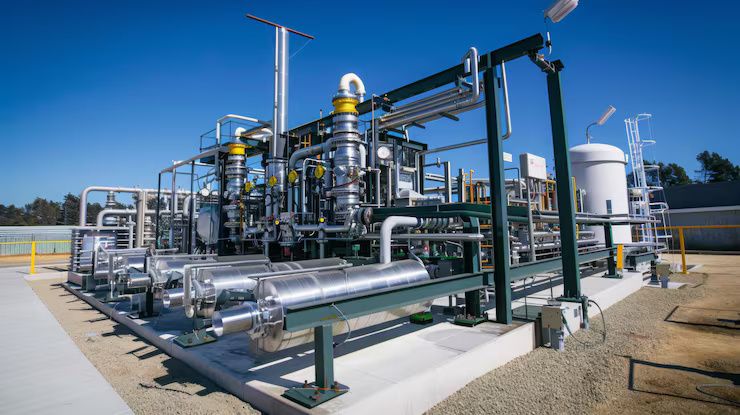
Industrial process plant manufacturers and engineering companies develop facilities for industries such as chemicals, pharmaceuticals, food processing, oil and gas, water treatment, and energy production. A process plant consists of interconnected equipment, pipelines, storage systems, instruments, and control technologies. Each part performs a specific function to support safe, consistent, and efficient production. Understanding plant design, equipment selection, construction, and automation helps explain how large-scale industrial operations function.
What Are Industrial Process Plants?
An industrial process plant is a facility where raw materials undergo one or more operations to produce useful products. These operations may include mixing, heating, cooling, separation, filtration, chemical reactions, and material handling.
Industrial process systems combine mechanical equipment, electrical installations, piping networks, and monitoring technologies. Their design depends on the materials being processed, production capacity, operating conditions, and industry requirements.
For example, a food processing plant may use mixing tanks, heat exchangers, pumps, and filtration equipment. A chemical facility may require reactors, pressure vessels, storage tanks, and specialized safety systems.
Types of Industrial Process Plants
Different industries require different plant configurations according to their production methods and material requirements.
Chemical Process Plants
Chemical process plants convert raw materials into chemical products through controlled reactions and separation processes. Common equipment includes reactors, distillation columns, heat exchangers, pumps, and storage vessels.
Chemical process plant manufacturers develop facilities based on product characteristics, operating temperatures, pressure conditions, and material compatibility. Safety systems and environmental controls are important parts of plant design.
Food and Beverage Processing Plants
Food processing plants handle operations such as blending, pasteurization, cooking, cooling, filtration, and packaging. Stainless steel equipment is commonly used where hygiene, cleaning, and corrosion resistance are important.
These facilities require carefully designed pipelines, storage tanks, pumps, and temperature control systems to maintain suitable processing conditions.
Pharmaceutical Process Plants
Pharmaceutical facilities are designed for controlled manufacturing and processing environments. They may include mixing vessels, filtration systems, purified water equipment, cleanrooms, and specialized monitoring instruments.
Equipment selection and facility design must consider hygiene, contamination control, product quality, and applicable regulatory requirements.
Water and Wastewater Treatment Plants
Water treatment plants remove unwanted substances from water through filtration, chemical treatment, sedimentation, and other processes. Wastewater treatment facilities use physical, biological, and chemical methods to manage wastewater before discharge or reuse.
Essential Equipment Used in Process Plants
Industrial plants depend on different equipment categories to perform production activities. Process plant equipment manufacturers develop machines and systems according to specific operating requirements.
| Equipment | Main function | Common application |
|---|---|---|
| Pumps | Move liquids | Water and chemical processing |
| Reactors | Support controlled reactions | Chemical manufacturing |
| Heat exchangers | Transfer thermal energy | Heating and cooling |
| Pressure vessels | Store or process pressurized materials | Industrial processing |
| Storage tanks | Hold raw materials and products | Manufacturing facilities |
| Filters | Remove unwanted particles | Food and water processing |
| Compressors | Increase gas pressure | Chemical and energy industries |
Industrial plant equipment suppliers provide components and machinery with different capacities, materials, and operating specifications. Selecting suitable equipment requires consideration of pressure, temperature, flow rate, corrosion resistance, and production requirements.
Process Plant Design and Engineering
Process plant design and engineering involve planning the equipment, layout, utilities, piping, and control systems required for production. Engineering teams evaluate the complete production process before construction begins.
Process Design
Process design identifies how raw materials move through different production stages. Engineers prepare process flow diagrams and define equipment requirements, operating conditions, and material flows.
Mechanical and Piping Engineering
Mechanical engineering focuses on equipment specifications, structural requirements, and machinery installation. Piping engineering determines how liquids, gases, and other materials move between different plant sections.
Electrical and Instrumentation Engineering
Electrical engineering covers power distribution, motors, electrical equipment, and related installations. Instrumentation engineering focuses on sensors, measuring devices, alarms, and control instruments used to monitor plant operations.
Industrial process plant engineering brings these disciplines together to develop an integrated production facility.
Plant Construction and Installation
Industrial plant construction involves preparing the site, building foundations, installing equipment, connecting pipelines, and completing electrical and instrumentation work.
Industrial plant construction companies coordinate different activities according to engineering drawings, project schedules, safety requirements, and construction specifications.
Process plant installation companies may handle equipment positioning, piping connections, electrical installations, testing, and commissioning. Proper installation helps ensure that individual systems operate according to their intended design.
Turnkey process plant manufacturers may coordinate several project stages, including design, equipment supply, construction, installation, and commissioning. The exact scope depends on the project agreement.
Industrial Process Automation Systems
Automation plays an important role in modern industrial facilities. Industrial process automation systems use sensors, controllers, software, and monitoring equipment to manage production operations.
These systems can monitor temperature, pressure, liquid levels, flow rates, and equipment conditions. Operators use control interfaces to observe production activities and adjust operating parameters.
Process plant automation systems may include:
Sensors: Measure physical conditions within equipment and pipelines.
Programmable controllers: Manage automated operating sequences.
Control valves: Regulate liquid and gas flow.
Monitoring software: Displays operating information and equipment status.
Safety systems: Support emergency responses and controlled shutdown procedures.
Automation can improve process consistency and help operators identify abnormal operating conditions. However, system performance depends on suitable design, maintenance, and operator training.
Benefits of Modular and Turnkey Process Plants
Modular process plant manufacturers develop facilities using prefabricated equipment sections or modules. These modules may be assembled at a separate location before transportation and installation at the project site.
Modular construction can simplify certain installation activities and support standardized equipment arrangements. Its suitability depends on transportation limits, site conditions, process requirements, and project complexity.
Turnkey process plant solutions provide a coordinated approach to project delivery. Complete process plant solutions may include engineering, procurement, construction, equipment installation, testing, and commissioning.
Custom process plant solutions are developed when standard equipment arrangements do not fully meet production requirements.
Selecting Industrial Process Plant Suppliers
Choosing suitable industrial process plant suppliers requires evaluating technical capabilities, project experience, equipment specifications, and service responsibilities.
Important considerations include:
Engineering capabilities: Ability to prepare process designs and technical documentation.
Equipment quality: Suitable materials, manufacturing standards, and inspection procedures.
Project experience: Familiarity with the relevant industrial application.
Installation support: Availability of commissioning and technical assistance.
Maintenance planning: Access to replacement components and operational documentation.
Safety requirements: Appropriate risk assessments and compliance with applicable regulations.
Process plant engineering companies and industrial process plant contractors may provide different services depending on their project responsibilities. Comparing their technical scope helps clarify which organization handles design, procurement, construction, and commissioning.
Frequently Asked Questions
What do industrial process plant manufacturers produce?
They develop industrial facilities and processing systems for chemical production, food processing, water treatment, energy, and other manufacturing activities.
What is process plant design and engineering?
It involves planning production processes, equipment, piping, electrical systems, instrumentation, and facility layouts.
What are turnkey process plant solutions?
These are coordinated project services that may cover engineering, equipment procurement, construction, installation, and commissioning.
What are modular process plants?
They are facilities assembled using prefabricated sections or modules designed for specific industrial processes.
Why are industrial process automation systems important?
They help monitor production conditions, control equipment operations, and identify abnormal operating conditions.
Conclusion
Industrial process plants combine equipment, engineering, construction, and automation to support large-scale production. Their design varies according to industry requirements, processing methods, and operating conditions. Understanding plant equipment, engineering services, installation methods, and automation technologies helps businesses evaluate suitable industrial process solutions and plan reliable manufacturing operations.